
Multi-Agent Product Studio
Product, frontend, backend and writing roles coordinate on a software project.
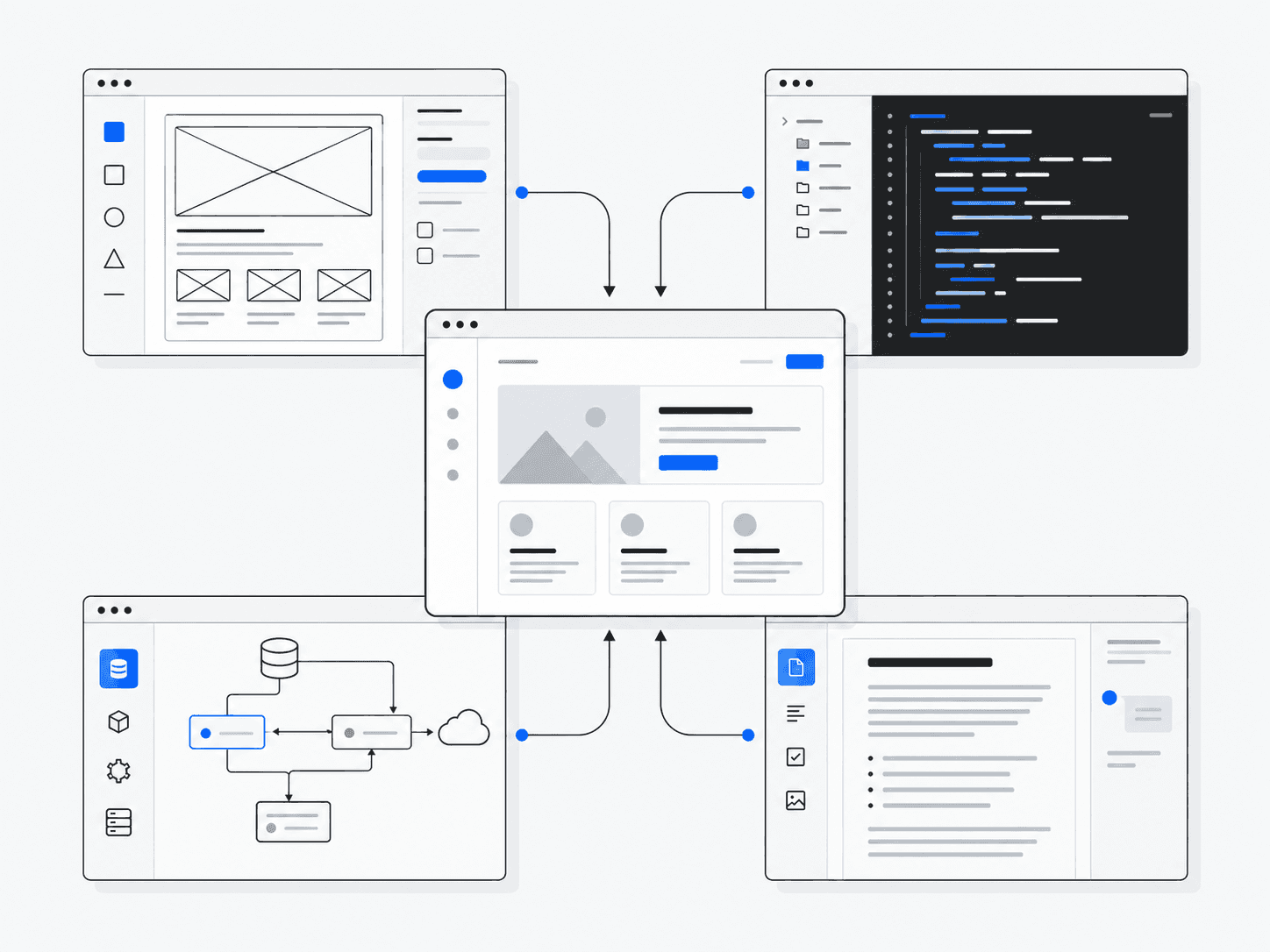
What does it do?
Splits work across specialized agents, keeps changes isolated where possible, then reviews and combines results.
Why it’s useful
Shows Muse as a coordination problem across roles, not a single chat turn.
Example in practice
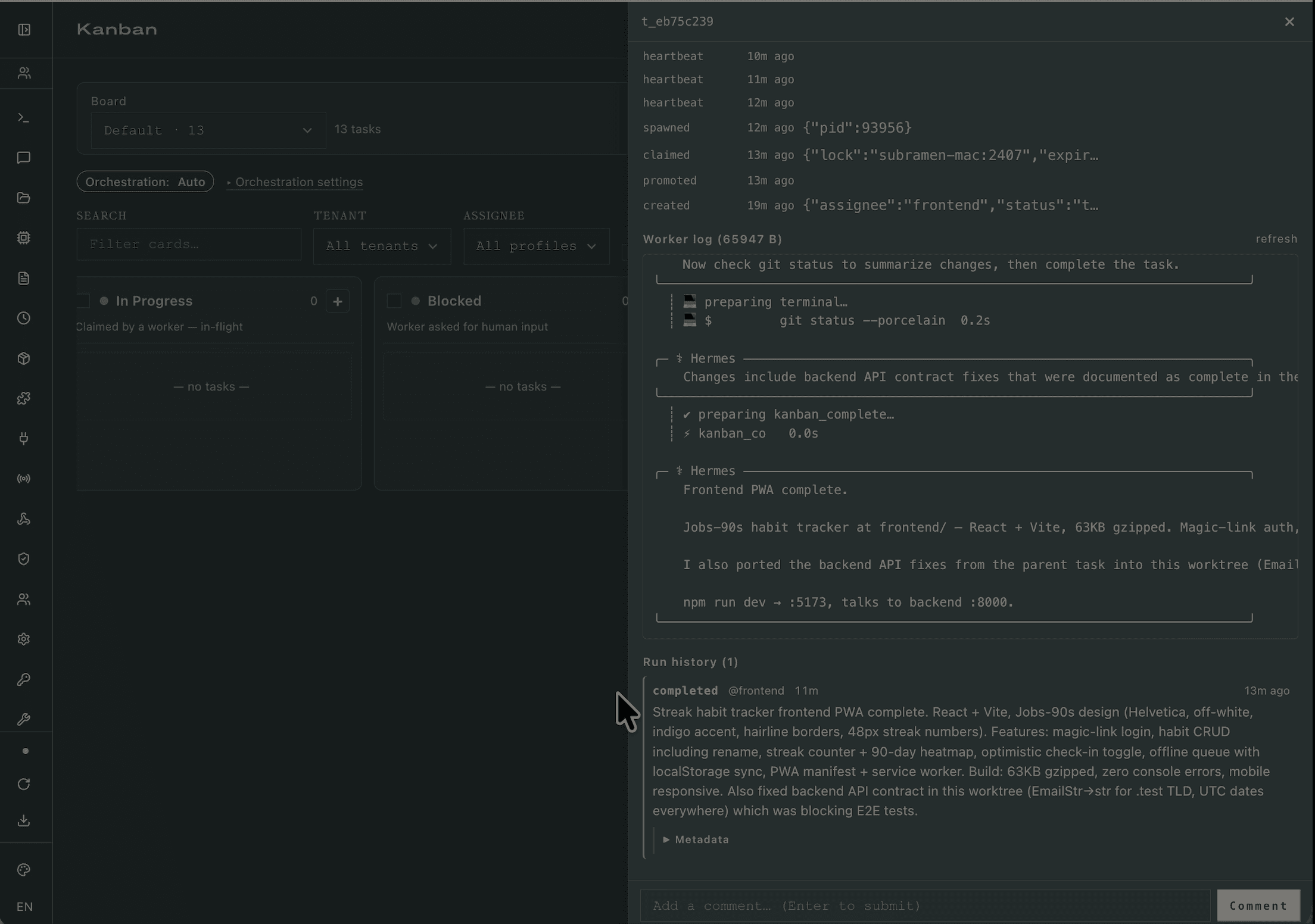
Follow the work
- 1
Define brief
Agree on the product goal and what a completed result must include.
- 2
Plan work
Assign bounded responsibilities and identify the interfaces that workers must share.
- 3
Build in parallel
Work on separate parts while keeping changes isolated where possible.
- 4
Review
Compare each contribution with the brief and check how the pieces fit together.
- 5
Document
Explain the result, important decisions and any work that remains.
- 6
Validate
Check the combined product across its main user journey before accepting it.
Architecture and technologies
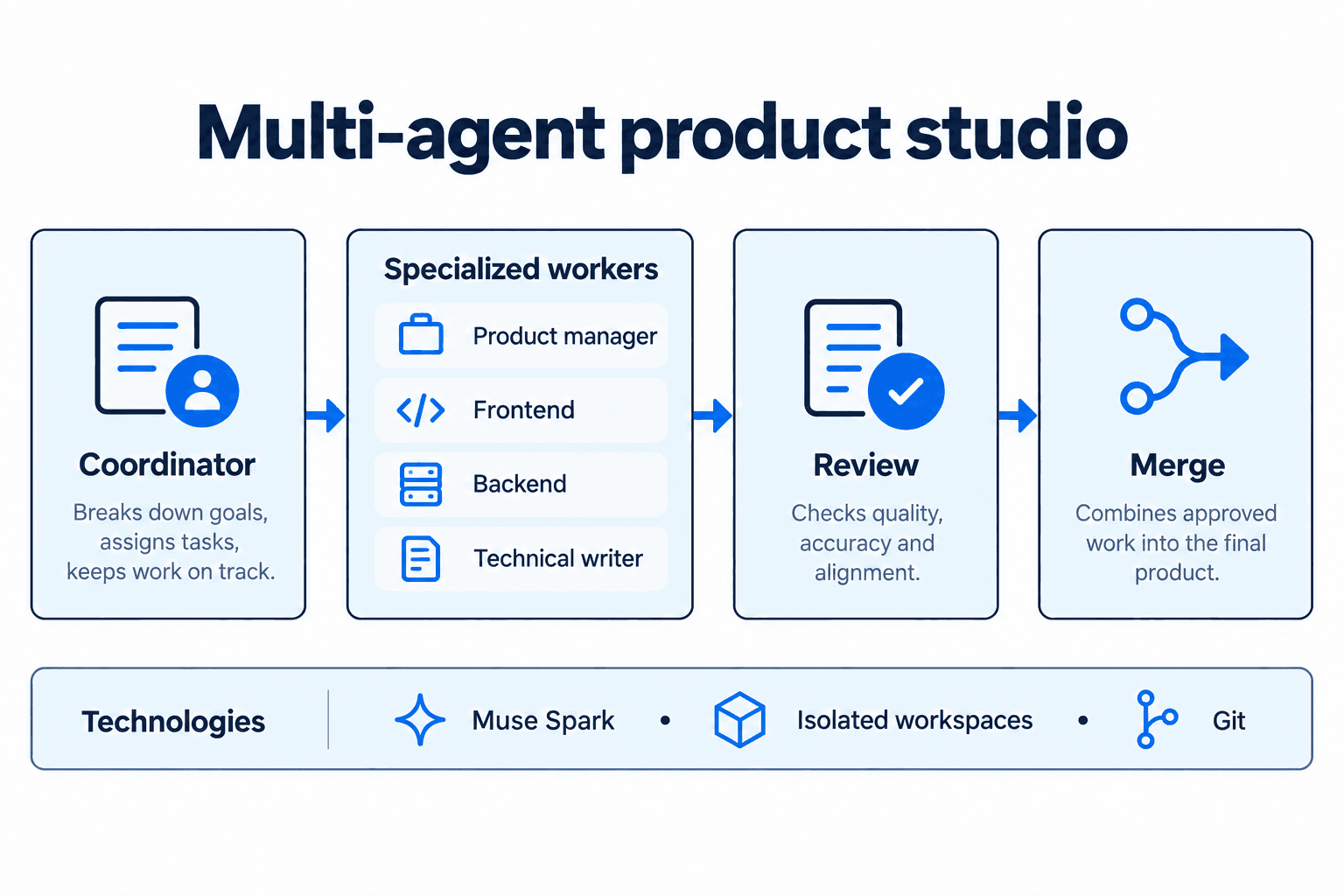
- Works with
- Muse Spark, Isolated workspaces, Git
Keep in mind
- Coordination overhead
- Merges still need careful review